
Wheat Atta Wholesale Price Today: Live Flour Rates
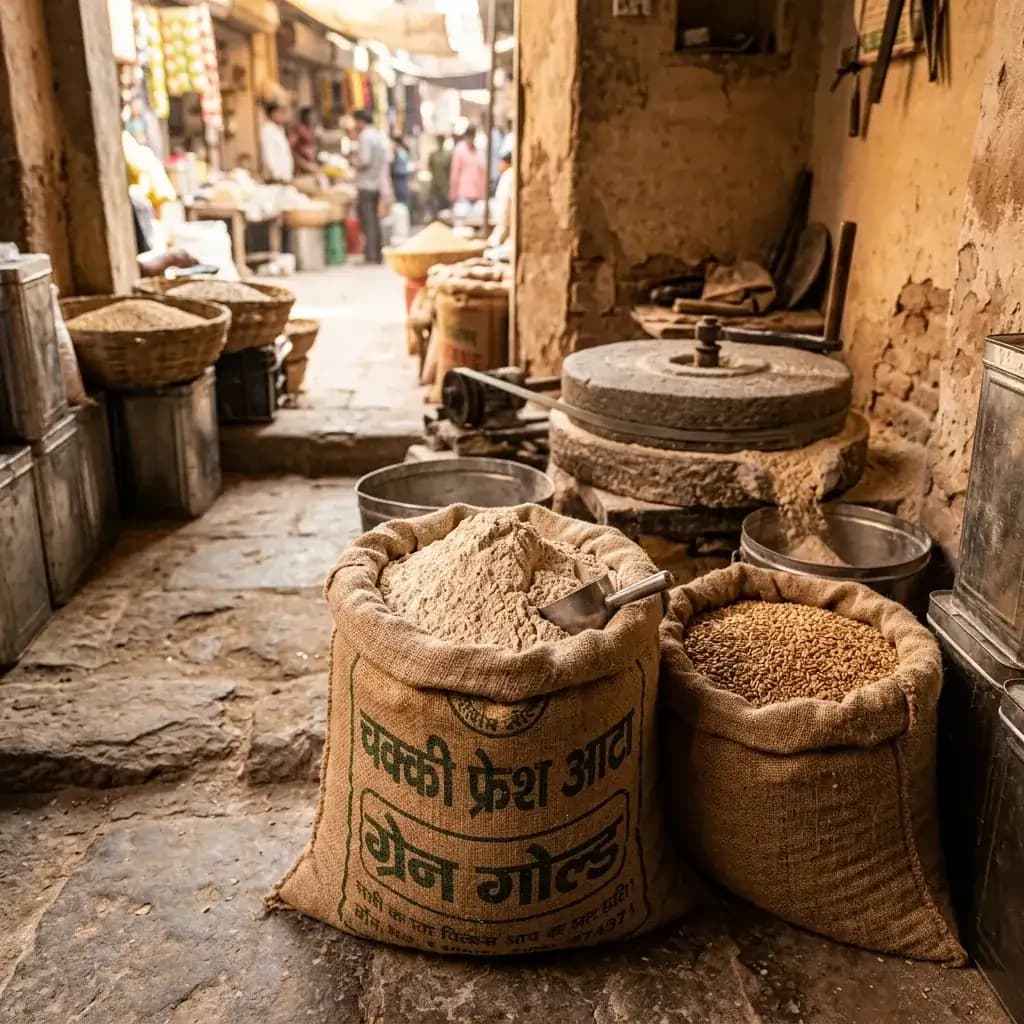
Whole Wheat Flour, universally known as 'Atta' in India, is the most crucial staple of the Indian diet. Used daily in almost every household to make rotis, chapatis, and parathas, the pricing and availability of Atta directly impacts the food security and budget of the common man.
While raw wheat is traded heavily in mandis, Atta is a milled product. The wholesale market for Atta consists of massive Roller Flour Mills processing hundreds of tons daily, as well as local 'Chakkis' (stone mills) that cater to neighborhood demands. Tracking wholesale Atta rates is essential for grocers, retail chains, and the food services sector.
The Flour Milling Industry in India
🏭 Organized Mills vs. Chakkis
The Indian flour market is deeply bifurcated. The traditional 'Chakki' (stone grinding mill) remains highly popular, grinding locally sourced wheat into coarse, fresh 'Chakki Atta'. Conversely, large Roller Flour Mills produce mass-market branded packaged Atta, which commands a massive share in urban retail supermarkets.
🌾 Wheat Sourcing
Flour mills procure raw wheat during the Rabi harvest season (April-June) primarily from states like Punjab, Haryana, MP, and UP. Premium varieties of wheat, such as MP's Sharbati or Gujarat's Bhalia, are specifically sourced by premium Atta brands to yield softer, sweeter rotis, commanding higher prices.
Types of Atta in the Market
- Chakki Fresh Atta: Stone-ground whole wheat flour. It retains the bran and germ, offering high dietary fiber. It is the most consumed variety across Indian households for making daily chapatis.
- Sharbati Atta: Milled specifically from the premium 'Sharbati' wheat grown in Madhya Pradesh. It absorbs more water, resulting in exceptionally soft rotis that remain tender for longer. Trades at a significant premium.
- Multigrain Atta: A rapidly growing health-conscious segment where whole wheat is blended with oats, soy, chana (chickpea), ragi, or bajra. It is generally the most expensive commercial atta category.
What Drives Wheat Atta Prices?
Atta wholesale prices are inextricably linked to raw wheat prices, but are also subject to milling dynamics:
- Raw Wheat Fluctuations: The primary driver is the mandi price of wheat. If government procurement (MSP buying) is aggressive and open market supply tightens, raw wheat prices rise, forcing mills to increase Atta prices.
- Government OMSS: To control inflation, the FCI (Food Corporation of India) occasionally releases bulk wheat to millers at subsidized rates through the Open Market Sale Scheme (OMSS), which immediately cools down wholesale Atta rates.
- Processing & Logistics: Increases in commercial electricity tariffs (for milling) and diesel prices (for transporting heavy bulk bags to distributors) are directly passed on to the wholesale price of Atta.
- Export Bans: When the government bans the export of raw wheat or wheat products (including Atta) to combat domestic food inflation, the retained supply generally stabilizes local wholesale rates.
🌾 Live Wheat Atta Wholesale Rates Today
View Full DataFrequently Asked Questions About Atta Prices
Q.What is the wholesale rate of Wheat Atta today?
Based on live data from 20 mandis, the average Atta wholesale price today is Rs 7,676/qtl. Rates range from Rs 7,600 to Rs 9,000. Note that premium branded atta may cost significantly more in retail.
Q.Why is wholesale Atta more expensive than raw wheat?
The price difference accounts for the milling process. Flour mills incur costs for cleaning the wheat, electricity for grinding, labor, packaging (usually 50kg bags for wholesale), and transportation. Additionally, there is a minor loss of moisture weight during milling.
Q.Does the government provide subsidized Atta?
Yes. To counter retail inflation, the Indian Government launched 'Bharat Atta', which is sold through agencies like NAFED, NCCF, and Kendriya Bhandars at a subsidized retail price (often around Rs 27.50/kg) to provide relief to consumers.