
UPI MDR Charges Explained: Myths vs Facts, RBI Rules & What You Will Actually Pay
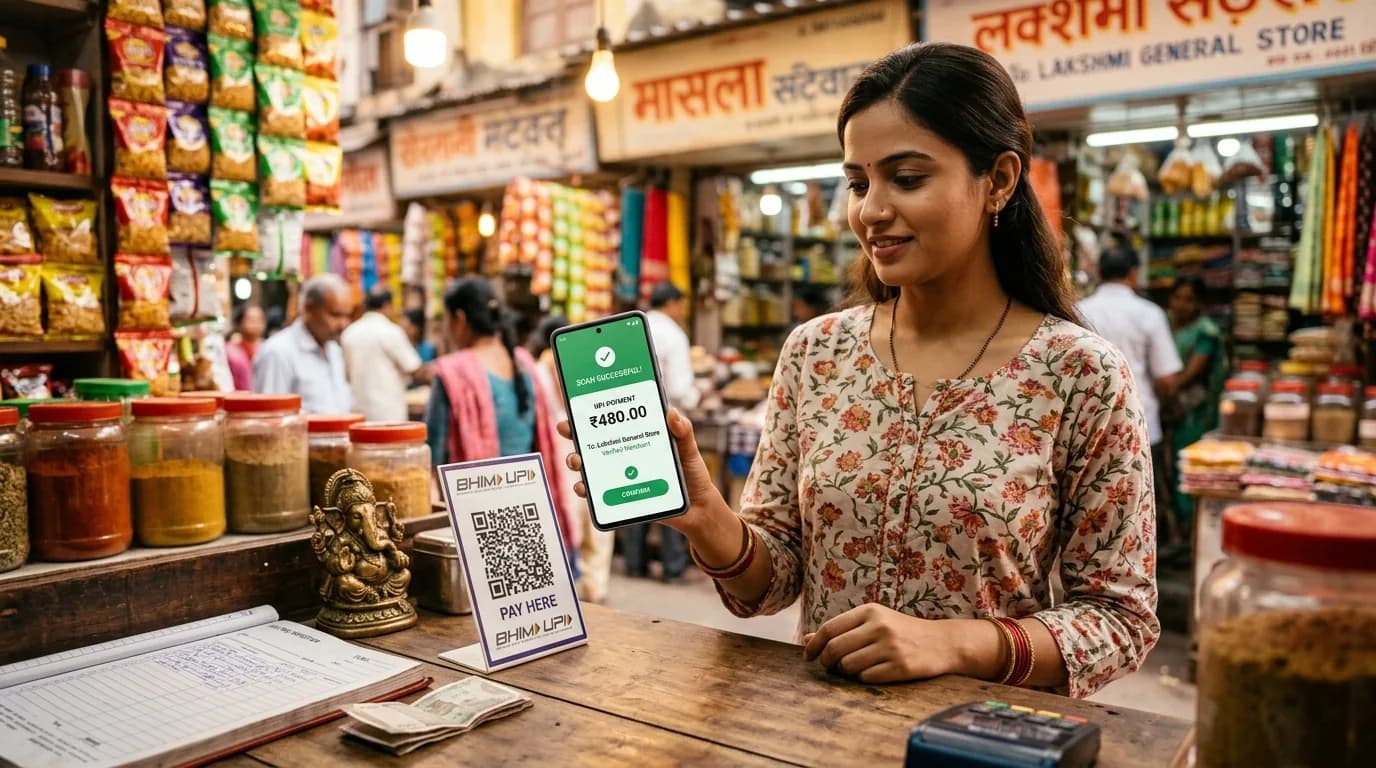
Digital payments via UPI remain 100% surcharge-free for everyday retail customers and small vendors across India.
Executive Summary: Will You Pay Any UPI Charges?
₹0 Extra (100% FREE)
No surcharge, zero convenience fee on grocery, retail, or online payments.
Unlimited FREE
Sending money to family, friends, rent, or staff carries zero fee.
100% Exempt
Merchants earning up to ₹1 Lakh/month or transactions ≤ ₹2,000 pay ₹0.
In recent weeks, social media channels, WhatsApp groups, and news broadcasts have been flooded with panic-inducing rumors alleging that every UPI transaction will soon attract heavy deductions. Viral messages have led millions of consumers, small shopkeepers, and mandi traders to question whether India's beloved digital payment system is ending its zero-fee era.
To protect consumers and provide transparent clarity, both the National Payments Corporation of India (NPCI) and the Reserve Bank of India (RBI) have released comprehensive directives outlining the upcoming Merchant Discount Rate (MDR) structure scheduled to take effect on October 15, 2026. This comprehensive guide breaks down the actual facts, details who pays and who is exempt, and explains what this means for consumers, small businesses, and agricultural mandis.
1. What is MDR and Why is it Being Discussed Now?
Merchant Discount Rate (MDR) is the commercial processing fee charged to a merchant by payment aggregators and acquiring banks for processing electronic transactions (such as debit cards, credit cards, or digital wallets). Historically, card networks like Visa and Mastercard charge 1.5% to 2.5% MDR on swipe machines.
In January 2020, the Government of India mandated a "Zero MDR" regime for UPI and RuPay debit cards to accelerate nationwide digital financial inclusion. While this decision sparked an unprecedented fintech revolution—powering over 15 billion transactions a month—it left banks, NPCI, and payment apps struggling to cover soaring infrastructure and server maintenance costs.
Why Zero MDR is Evolving into a Tiered Model:
- Switch Reliability & Cloud Servers: High-concurrency peak hour transactions require massive bank data centers to prevent payment drops and failed debit loops.
- AI Fraud Prevention & Cybersecurity: Real-time monitoring systems are required to detect phishing, spoofing, and malicious scam networks.
- Sustainable Fiscal Model: Moving away from continuous taxpayer-funded government subsidies to a self-sustaining commercial model funded solely by large corporations.
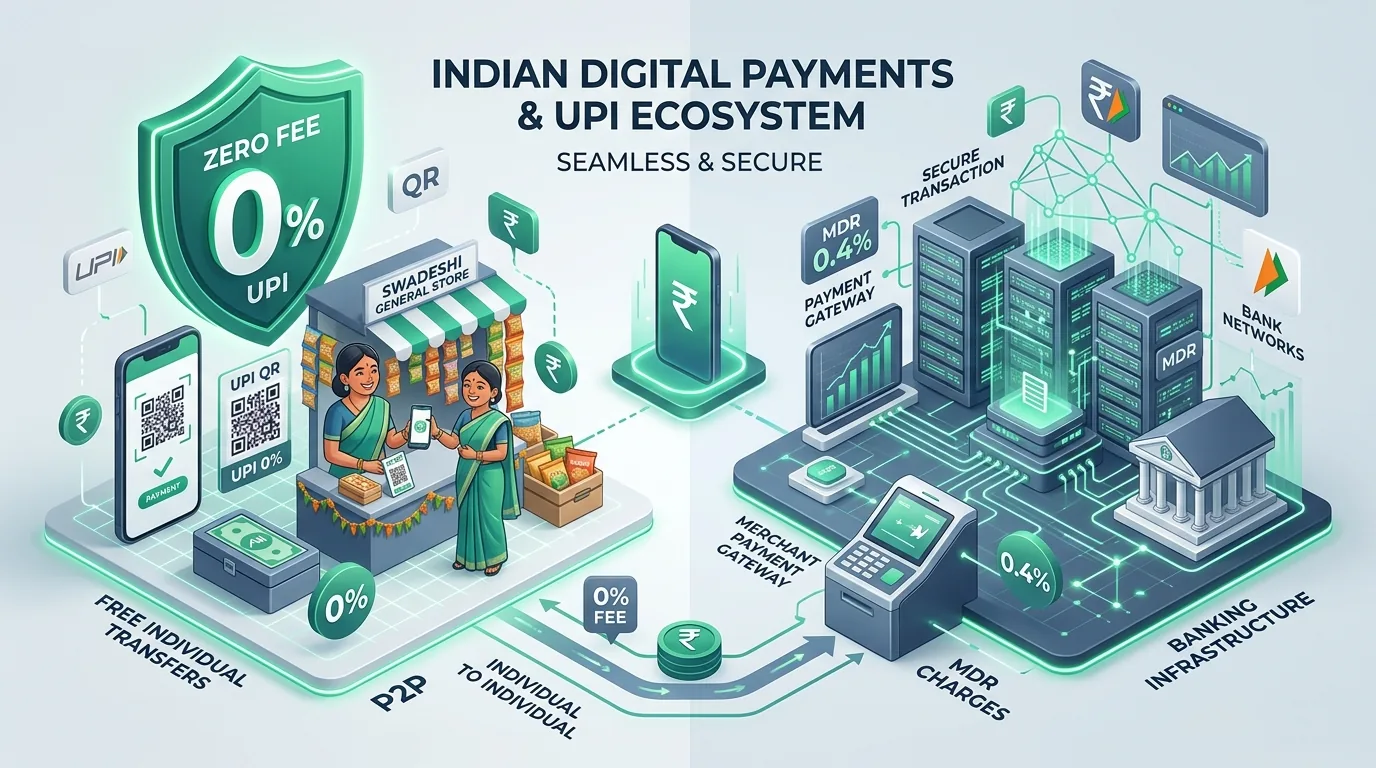
Visual Architecture: 96% of transactions in India fall under the zero-charge umbrella, protecting consumers and small traders.
2. The 5 Core Pillars of the New UPI MDR Rules
The NPCI and RBI have carefully designed the new MDR framework so that it shields the common man, protects nano-enterprises, and exclusively collects sustainable processing revenue from high-turnover enterprises.
Pillar 1: 100% Free Peer-to-Peer (P2P) Transfers
Money transfers between two individuals (family members, friends, split bills, rent, housekeeping staff) remain 100% free with ZERO charges, regardless of whether you send ₹10 or ₹1,00,000.
Pillar 2: Zero Charges on P2M Payments Up to ₹2,000
Over 90% of daily consumer transactions in India (vegetables, milk, chai, medicines, street food, auto fares) are under ₹2,000. All such transactions carry 0% MDR across all merchant categories.
Pillar 3: Small Merchants (< ₹1 Lakh / Month) Fully Exempt
Small businesses, neighbourhood kirana stores, and local artisans with monthly digital collections up to ₹1,00,000 are completely exempted from MDR, ensuring micro-merchants never face processing deductions.
Pillar 4: Flat ₹5 Cap on Essential Sectors & Agriculture
Crucial sectors—including agricultural inputs (fertilizers, seeds, pesticides), Indian Railways tickets, fuel stations, utility bills, and telecom recharges—will attract a maximum flat MDR of only ₹5 per transaction above ₹2,000, instead of a percentage rate.
Pillar 5: 0.4% MDR for Large Commercial P2M with ₹300 Cap
For large enterprises, malls, luxury retail, and online aggregators, a competitive 0.4% MDR applies to transactions above ₹2,000. Crucially, high-value transactions of ₹75,000 and above are capped at a maximum of ₹300 per transaction.
3. Comprehensive UPI MDR Rate & Fee Matrix
Refer to this handy breakdown table to understand exactly how different transaction types are treated under the new directive:
| Transaction Scenario | Amount | MDR Rate | Who Bears Cost? |
|---|---|---|---|
| Person-to-Person (P2P) | Any Amount | ₹0 (100% Free) | No One |
| Small Merchant QR (< ₹1L/month) | Any Amount | ₹0 (Exempt) | No One |
| Everyday Retail Purchase | Up to ₹2,000 | ₹0 (Zero MDR) | No One |
| Essential Services (Agri, Railways, Fuel) | Above ₹2,000 | Flat ₹5 Cap | Merchant Only |
| Commercial P2M (Malls, Electronics) | ₹2,001 to ₹74,999 | 0.4% | Large Merchant Only |
| High-Value Commercial Payments | ₹75,000 and Above | Capped at ₹300 | Enterprise Only |
| Prepaid Wallet / PPI on Merchant QR | Above ₹2,000 | 1.1% Interchange | Merchant Only |
4. Myth vs Reality: Debunking Viral Social Media Rumors
Let us examine the most widespread claims circulating on messaging apps and verify what the official regulations say:
FACT: Customers are 100% exempt from any MDR or fee. If your bill is ₹500, exactly ₹500 will be debited from your account—not a single paisa more.
FACT: Nano-merchants, street vendors, and retailers earning up to ₹1 Lakh monthly pay ZERO MDR. There is zero financial disincentive for small shopkeepers to accept QR payments.
FACT: Passing MDR on to consumers as an extra surcharge is strictly prohibited by RBI guidelines. Doing so violates banking agreements and can lead to merchant terminal cancellation.
FACT: With 96% of everyday transactions remaining totally free and high-ticket B2B transactions capped at ₹300, UPI remains vastly cheaper than handling cash, credit cards (2-3% MDR), or POS machine rentals.
5. Impact on Mandis, Farmers & Rural Commerce
In agricultural mandis across India—from Azadpur in Delhi to Vashi in Mumbai, and grain markets across Uttar Pradesh, Madhya Pradesh, and Punjab—UPI has emerged as an indispensable lifeline for settling transactions swiftly without cash theft risks. Here is how the new rules apply directly to agricultural commerce:
Direct Farmer Crop Sale Payments
When a trader or commission agent (adatiya) transfers payment directly to a farmer’s bank account for wheat, paddy, mustard, or vegetables, it operates as a P2P transfer or direct settlement. Farmers will receive 100% of their money without any deduction.
Seeds, Fertilizers & Agro Inputs
To ensure that farm input costs do not rise, the government has categorized agricultural input dealers under essential goods. Even for transactions above ₹2,000, the MDR is capped at a negligible flat rate of ₹5 per transaction.
Village Kirana & Mandi Tea Stalls
Mandi canteen vendors, weighbridge operators, and village grocery stores collecting under ₹1,00,000 monthly through UPI QR codes pay zero MDR.
Wholesale B2B Mandi Settlements
For bulk inter-state commodity trade (e.g. ₹5 Lakh truckload settlements via merchant payment systems), the ₹300 ceiling prevents excessive charges, keeping digital settlements vastly more efficient than NEFT/RTGS handling.
6. Frequently Asked Questions (FAQs)
Q:Will normal consumers have to pay extra money when paying via UPI?
No, absolutely not. The Reserve Bank of India (RBI) and National Payments Corporation of India (NPCI) have explicitly clarified that zero surcharge or MDR can be passed on to customers. All consumer UPI payments remain 100% free.
Q:Are peer-to-peer (P2P) transfers between friends and family charged?
No. Person-to-Person (P2P) bank transfers using PhonePe, Google Pay, Paytm, BHIM, or any bank UPI app are completely exempt from any MDR, regardless of the transfer amount.
Q:What is the 0.4% UPI MDR rule and when does it take effect?
The new framework takes effect from October 15, 2026. A 0.4% Merchant Discount Rate (MDR) applies only to commercial Person-to-Merchant (P2M) transactions exceeding ₹2,000, payable strictly by high-turnover merchants, not consumers.
Q:Are local kirana stores, chaiwalas, and small vendors exempt from MDR?
Yes! Small merchants with monthly digital collections of up to ₹1,00,000 are completely exempt from MDR. Furthermore, any transaction up to ₹2,000 carries zero MDR across all merchants.
Q:How does the UPI MDR affect farmers and agricultural mandi payments?
Direct farmer payments for crop sales remain free as P2P or agricultural settlements. Additionally, agricultural inputs (fertilizers, certified seeds, pesticides, farming machinery) are classified under essential services with a flat cap of ₹5 per transaction above ₹2,000.
Q:What is the maximum fee cap on high-value UPI transactions?
For transactions of ₹75,000 and above, the maximum MDR charge for merchants is capped at ₹300 per transaction, ensuring large ticket B2B commercial payments remain cost-effective.
Q:Can a merchant legally ask a customer to pay extra for scanning QR code?
No, charging a surcharge or convenience fee to consumers on UPI payments is illegal under RBI and NPCI guidelines. Consumers can report such violations directly to the consumer forum or payment aggregator.
Q:Why did NPCI and RBI introduce this MDR framework after years of zero MDR?
With UPI processing over 15 billion transactions every month, massive investments are required for high-availability cloud servers, real-time banking switch upgrades, AI-driven fraud detection, and round-the-clock cybersecurity. A tiered commercial MDR ensures long-term sustainability without relying on taxpayer subsidies.
Track Real-Time Mandi Bhav with Zero Hassle
Stay informed with accurate, daily wholesale market prices for over 250+ crops across 2,000+ mandis in India on Mandi Today.