
Soyabean Mandi Bhav Today: Live Prices Across India
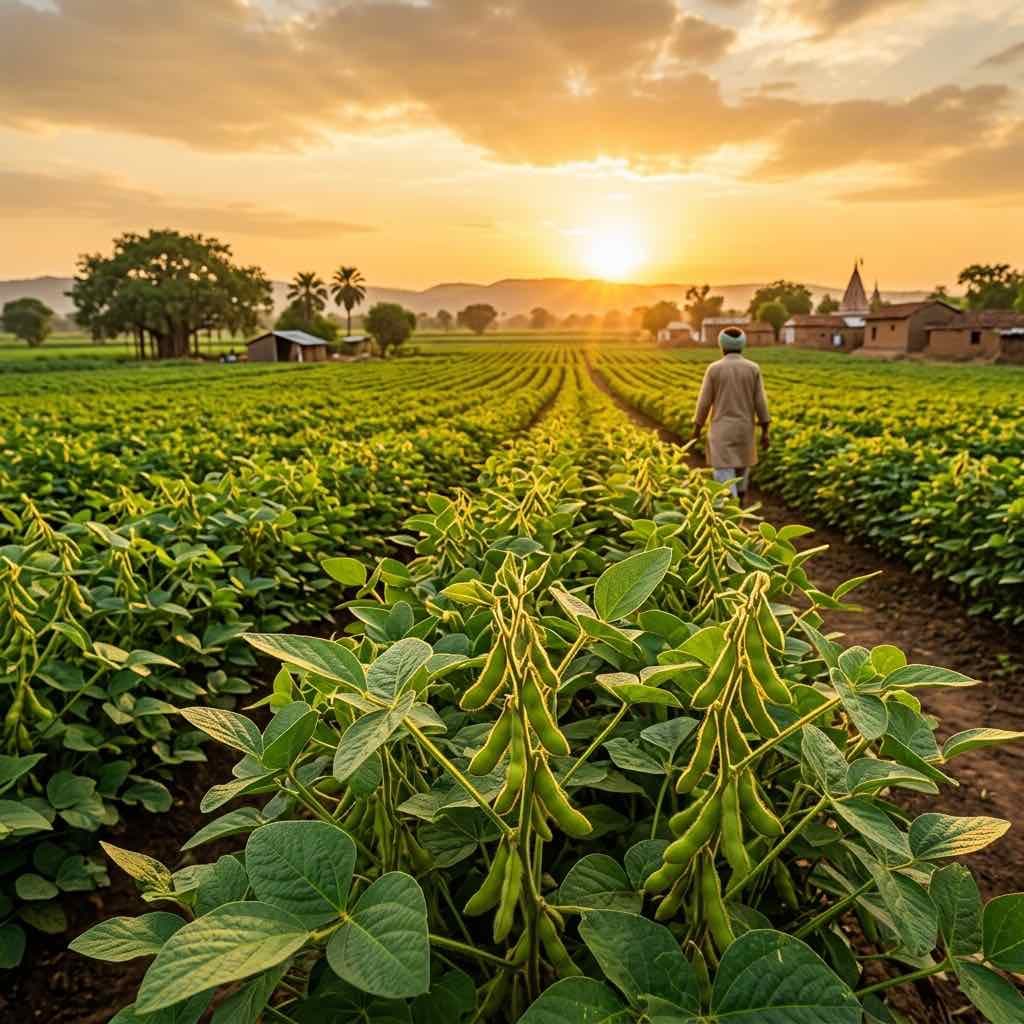
Soyabean is not just another oilseed crop in India - it is the undisputed cash crop king of central India, particularly Madhya Pradesh, which alone produces more than half the national output. Often called 'Yellow Gold' by MP farmers, soybean drives the fortunes of millions of farming families across the Malwa plateau. The crop has a unique dual value: it yields both cooking oil (soybean oil accounts for about 25% of India's edible oil consumption) and high-protein meal used in poultry feed, aquaculture, and food processing. This dual demand means soybean mandi bhav is influenced by both domestic oil markets and global oilseed prices, making it one of the most actively tracked commodities on NCDEX futures as well.
India's Soyabean Production: Scale & Geography
🫘 National Output
India produces approximately 12-14 million tonnes of soybean annually, making it the 5th largest producer globally after the USA, Brazil, Argentina, and China. The crop is exclusively a Kharif (monsoon) crop, sown in June-July and harvested in October-November. This single-season dependency means any monsoon disruption directly impacts the entire annual supply chain.
📍 Top Producing States
Madhya Pradesh dominates with 52-55% of national production, concentrated in the Malwa-Nimar belt (Indore, Ujjain, Dewas, Ratlam, Shajapur, Mandsaur districts). Maharashtra (Vidarbha, Marathwada) contributes 30-32%, followed by Rajasthan (Kota, Jhalawar, Baran), Karnataka, and Telangana. The Indore mandi rate is considered the benchmark for soybean pricing across India.
Soybean Varieties Traded in Indian Mandis
- JS-335: The most widely cultivated variety in MP for decades. Medium maturity (95-100 days), good oil content (18-20%). Still accounts for a significant share of mandi arrivals.
- JS 95-60 (JS 9560): Higher yielding replacement for JS-335. Early maturity (85-90 days), better disease resistance. Rapidly gaining acreage in Indore and Ujjain divisions.
- NRC-37 / NRC-86: Varieties released by ICAR-IISR Indore with improved oil content and rust resistance. Gaining popularity in Maharashtra and Rajasthan.
- Local / Desi: Open-pollinated local selections still grown by small farmers, particularly in Rajasthan and parts of Vidarbha. Lower yields but adapted to local soil and moisture conditions.
Soybean Value Chain: From Field to Factory
🛢️ Soybean Oil
About 18-20% of soybean weight converts to crude oil after crushing. Refined soybean oil is the second most consumed cooking oil in India after palm oil. Crushing capacity is concentrated in Indore, Dewas, and Latur.
🐔 Soy Meal (DOC)
The remaining 78-80% becomes de-oiled cake (DOC) - a high-protein animal feed ingredient. India is one of the world's largest soy meal exporters, shipping 2-4 million tonnes annually worth Rs 8,000-12,000 crore to Japan, South Korea, Iran, and SE Asia.
📊 NCDEX Futures
Soybean is one of the most liquid contracts on NCDEX. Futures prices on NCDEX Indore delivery directly influence physical mandi rates across MP and Maharashtra. Daily traded volumes can exceed Rs 2,000-3,000 crore during harvest season.
What Drives Soybean Prices in Indian Mandis?
The Government MSP for Soybean (Kharif 2024-25) is Rs 4,892 per quintal. However, actual mandi prices fluctuate based on:
- CBOT Soybean Futures: Chicago soybean futures set the global tone. Any movement in US/Brazil crop data directly impacts Indian sentiment.
- Crushing Margins: When oil and meal prices rise simultaneously, crushers bid aggressively in mandis pulling soybean rates up.
- Import Duty on Edible Oils: Government decisions on palm oil and soybean oil import duty directly affect domestic soybean demand. Higher import duty = higher domestic soy price.
- Monsoon Quality: Excess rain during pod-filling stage (September) reduces oil content and causes fungal damage, depressing rates. Drought stress reduces volume but improves oil quality, pushing rates up.
🫘 Live Soyabean Mandi Rates Today
View Full DataTrack Soyabean Price Trends on Mandi Today
View interactive soybean price charts with 30-day and 1-year trends. Compare rates across Indore, Latur, Kota and other key mandis. Make informed selling decisions backed by data.
Frequently Asked Questions About Soyabean Prices
Q.What is the current rate of Soyabean today?
Based on live data from 20 mandis, the average Soyabean price today is Rs 8,691/qtl. Rates range from Rs 6,825 to Rs 11,000.
Q.What is the MSP for Soyabean in 2024-25?
The Government MSP for Kharif Soybean is Rs 4,892 per quintal for the 2024-25 season. NAFED and state agencies undertake procurement at MSP when market prices fall below this level, though actual procurement volumes remain limited compared to total production.
Q.Where is the highest Soyabean rate today?
The highest rate today is Rs 11,000/qtl at Theni(uzhavar Sandhai ) in Tamil Nadu. Premium rates are usually found in South Indian mandis and near crushing hubs where local demand is strong.
Q.Why is the Indore mandi rate so important for soybean?
Indore is the epicentre of India's soybean trade. It hosts the NCDEX delivery centre, has the highest concentration of solvent extraction plants, and handles the largest volume of physical soybean trading. The Indore mandi rate effectively sets the floor and ceiling for soybean prices across all of central India.
Q.How much soy meal does India export?
India exports 2-4 million tonnes of soy meal (de-oiled cake) annually, worth Rs 8,000-12,000 crore. Key buyers include Japan, South Korea, Iran, Thailand, Vietnam, and Indonesia. Export demand is a major price driver - when global meal prices rise, domestic soybean rates follow due to increased crusher demand.