
Potato (Aloo) Mandi Bhav Today: Live Rates Across India
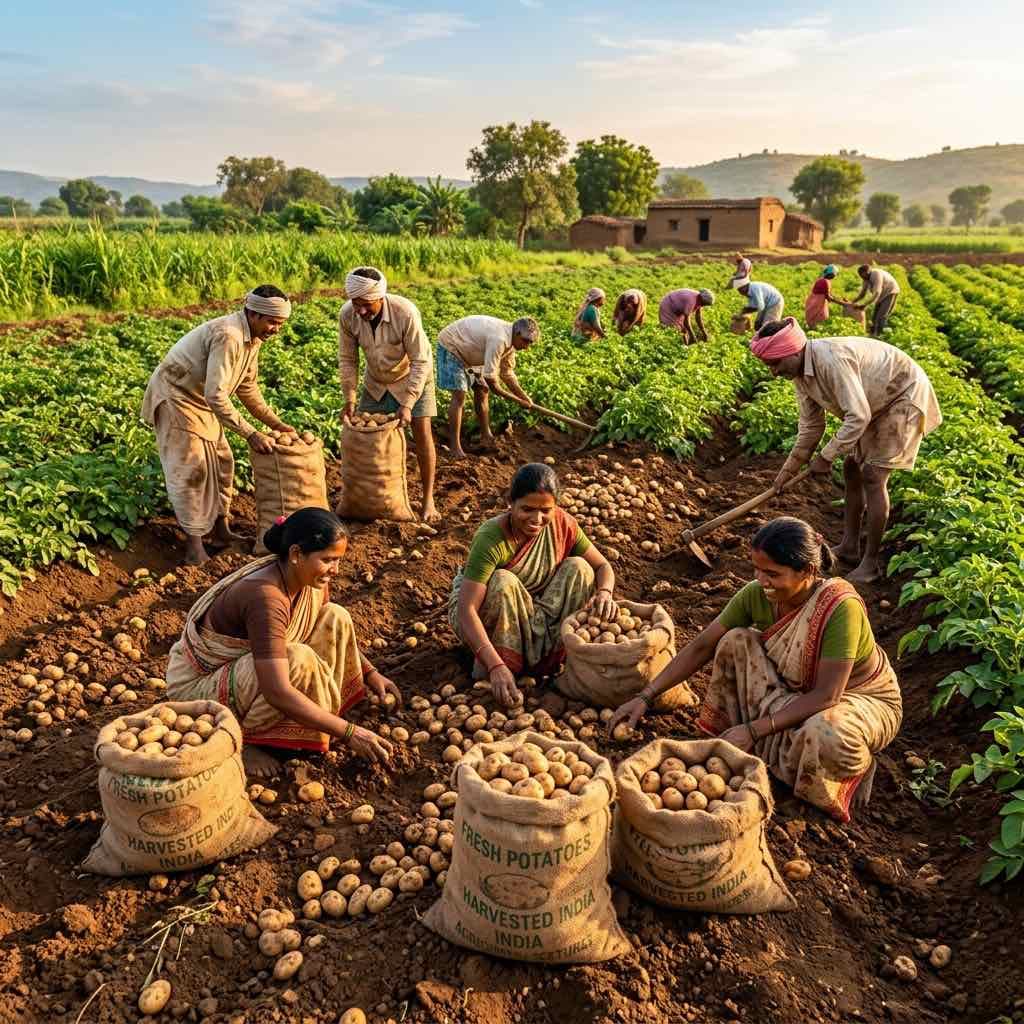
Potato, or Aloo as every Indian household knows it, is not just a vegetable - it is the undisputed king of the Indian kitchen. From samosas in Delhi to vada pav in Mumbai, aloo paratha in Punjab to dum aloo in Kashmir, no other crop touches as many plates across the country. India is the second-largest potato producer in the world after China, and fluctuations in aloo mandi bhav directly impact household budgets, restaurant margins, and the processed food industry. For farmers and traders, tracking live potato rates across mandis is crucial since potato prices are notoriously volatile - swinging from glut-driven lows of Rs 300-400/qtl to scarcity-driven highs of Rs 2,500+/qtl within the same year.
India's Potato Production: The Numbers That Matter
🥔 National Output
India produces approximately 53-56 million tonnes of potatoes annually across roughly 2.2 million hectares. Uttar Pradesh alone contributes nearly 31-33% of the national output, making UP mandis the single most important pricing benchmark. The crop is primarily a Rabi (winter) crop, sown in October-November and harvested between January-March, though hill regions grow it during Kharif season.
📍 Top Producing States
Uttar Pradesh leads massively, followed by West Bengal (especially Hooghly, Bardhaman, Bankura districts), Bihar (Nalanda, Patna), Gujarat (Banaskantha, Sabarkantha), Madhya Pradesh, and Punjab. The famous Agra, Farrukhabad, and Kannauj mandis in UP handle enormous volumes during February-April peak season, often setting the nationwide floor price.
Popular Potato Varieties in Indian Markets
- Jyoti: One of the most popular table varieties across India. Medium-sized, smooth skin, suitable for all cooking styles. Dominates West Bengal and parts of UP.
- Kufri Pukhraj: A high-yielding early-maturing variety developed by CPRI Shimla. Yellow flesh, excellent for chips and frying. Commands premium rates in Gujarat and Rajasthan mandis.
- Kufri Chipsona (1, 3, 4): Purpose-bred for the chips and processed food industry. High dry matter content, low sugar - ideal for companies like Haldiram, Balaji, and PepsiCo (Lay's). These fetch 15-25% premium over table varieties.
- Desi / Local: Traditional varieties grown by small farmers, primarily for household consumption and local sabzi mandis. Rates tend to track slightly below branded commercial varieties.
- Kufri Sindhuri / Red Potato: Red-skinned variety popular in parts of Bihar, Jharkhand and MP. Good keeping quality and transport resilience. Often preferred by traders for long-distance supply chains.
Cold Storage: The Hidden Hand Behind Potato Prices
🧊 Storage Capacity
India has approximately 40-42 million tonnes of cold storage capacity, and roughly 60-65% of it is used exclusively for potatoes. UP alone has over 2,800 cold stores. The timing of farmers loading and unloading from cold storage is the single biggest factor controlling mandi supply and therefore prices between April and November.
📊 Price Seasonality
Prices typically crash during Feb-April when the fresh harvest floods mandis (Rs 400-800/qtl). They gradually rise during May-September as supply shifts to cold-stored stock. By October-December, if cold store stocks run low, prices can spike dramatically to Rs 1,500-2,500/qtl. Smart traders watch cold storage loading reports from UP and West Bengal closely.
Where Do India's Potatoes Go?
🍳 Household & Restaurant
About 60-65% is consumed fresh in households and the food service sector. Potato appears in over 80% of North Indian dishes and is the most consumed vegetable by volume.
🍟 Chips & Processing
About 15-18% goes into chips, french fries, frozen products, and starch manufacturing. This segment is growing at 12-15% annually driven by brands like Haldiram, Balaji, Lay's, and McDonald's.
🌍 Exports
India exports about 0.5-0.8 million tonnes annually worth Rs 1,200-1,800 crore. Top destinations include Nepal, Sri Lanka, UAE, and Malaysia. Fresh table potato and seed potato are the main export categories.
🥔 Live Potato (Aloo) Mandi Rates Today
View Full DataTrack Potato Price Trends on Mandi Today
Using Mandi Today, you can view interactive price charts for potato showing 30-day and 1-year trends, compare rates across multiple mandis, identify which market is offering the best rate today, and plan your cold storage loading/unloading - all for free.
Frequently Asked Questions About Potato Prices
Q.What is the current rate of Potato (Aloo) today?
Based on live data from 20 active mandis, the average price of Potato today is Rs 6,815 per quintal. Rates range from Rs 6,250 to Rs 7,500 depending on variety, quality, and location.
Q.Where is the highest Potato rate today?
The highest recorded price today is Rs 7,500 per quintal at Sundarapuram(uzhavar Sandhai ) in Tamil Nadu. Premium rates are usually seen in South Indian mandis and metro wholesale markets where supply is limited.
Q.Why do potato prices vary so much across India?
Potato prices can differ by Rs 500-1,500/qtl between producing states (UP, West Bengal) and consuming states (Tamil Nadu, Kerala, Karnataka). Transportation costs, cold chain availability, and local demand-supply gaps create these differentials. Southern mandis consistently pay higher rates since very little potato is grown locally there.
Q.When is the best time to sell potatoes for maximum profit?
Historically, potato prices peak during September-November when cold-store stocks thin out and fresh harvest is still months away. Selling directly from cold storage during October typically yields 40-80% higher rates compared to selling immediately after harvest in February-March. However, cold storage costs (Rs 80-120/qtl for 6-8 months) and spoilage risk must be factored in.
Q.Does the government control potato prices?
Potato does not have a government MSP (Minimum Support Price) like wheat or rice. However, the government can intervene through stock limits under the Essential Commodities Act during extreme price spikes, ban exports, or release buffer stock through NAFED to stabilize prices. State governments also sometimes impose temporary mandi cess waivers to reduce prices.