
Muzaffarnagar Mandi Bhav Today: India's Gur Capital — Live Rates & Complete Guide
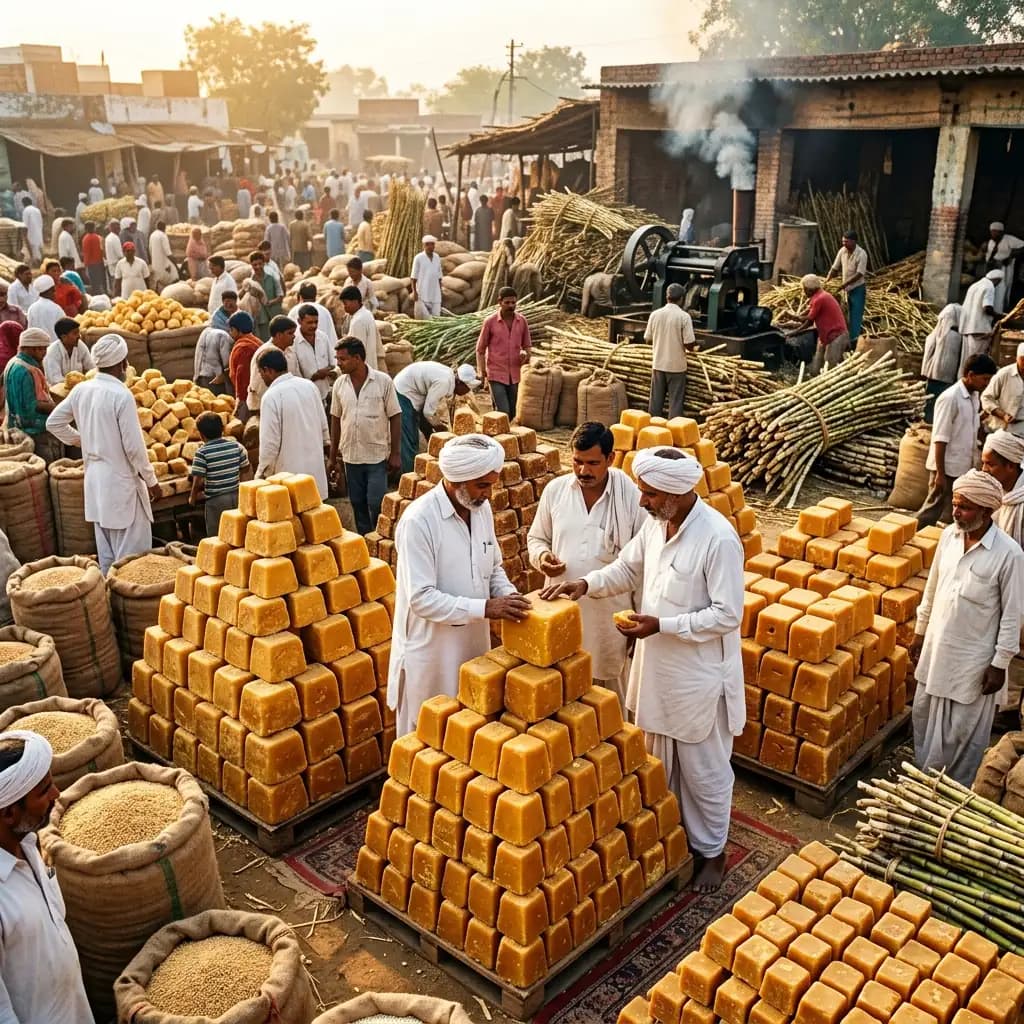
Muzaffarnagar — the undisputed gur (jaggery) capital of India — sits at the heart of western Uttar Pradesh's formidable sugarcane belt. This district, nestled between the Ganga and Yamuna rivers in the fertile Upper Doab, produces and trades more jaggery than any other district in India. The Muzaffarnagar Gur Mandi is legendary — during the October-March crushing season, golden blocks of freshly-made gur from thousands of local kolhus (crushers) flood the market, creating one of the most spectacular agricultural commodity scenes in India. But Muzaffarnagar is far more than gur — it is also a major hub for sugarcane (the district has over 10 sugar mills), Basmati rice (Pusa 1121, 1509 — the premium export-grade varieties), wheat, and the burgeoning paneer/dairy industry. With sub-mandis at Shahpur, Khatauli, Budhana, Charthawal, Jansath, and Kairana, the Muzaffarnagar mandi network has a combined daily turnover of Rs 10-25 crore, surging to Rs 30-50 crore during peak gur season. The district's proximity to Delhi (125 km via NH-58/Meerut Expressway) and Dehradun, plus its position on the Delhi-Haridwar rail corridor, makes it a critical North Indian commodities hub.
📋 Muzaffarnagar Mandi: Quick Facts
Official Name
Krishi Upaj Mandi Samiti, Muzaffarnagar (under UP Krishi Utpadan Mandi Adhiniyam, 1964). One of the most commercially active mandi samitis in western UP.
Sub-Markets
Muzaffarnagar City Mandi, Shahpur (major gur trading centre), Khatauli (sugar mill town + grain), Budhana (rice + wheat), Charthawal, Jansath, Kairana (famous for citrus fruit trade). Each has distinct commodity specializations.
Location & Connectivity
Muzaffarnagar city, western UP. On NH-58 (Delhi-Dehradun highway) and Delhi-Haridwar rail line. 125 km from Delhi (2 hrs via Meerut Expressway), 30 km from Saharanpur, 60 km from Meerut. Excellent road connectivity to Haryana (Panipat, Karnal) via NH-709.
Daily Turnover
Rs 10-25 crore across all sub-mandis on normal days. Surges to Rs 30-50 crore during peak gur season (Nov-February) and Basmati season (Oct-Dec). Shahpur gur mandi alone can do Rs 5-15 crore daily during peak.
Auction Timing
Gur Mandi (Shahpur): 7:00 AM - 1:00 PM (seasonal, Oct-March). Grain Mandi: 10:00 AM - 3:00 PM. Vegetable Mandi: 5:00 AM - 11:00 AM. Saturday is a working day. Basmati rice trading peaks in morning sessions.
Weekly Off / Holidays
Closed on Sundays and gazetted national holidays. During peak gur season (Dec-Jan), some informal trading happens even on Sundays. Major closures: Holi, Diwali, Eid, Republic Day, Independence Day.
Key Commodities Traded at Muzaffarnagar Mandi
- Gur (Jaggery) — India's #1 Gur Trading Hub: Muzaffarnagar is the undisputed gur capital of India. The Shahpur Gur Mandi alone handles an estimated 8-12 lakh tonnes of gur annually — more than any other single market in the country. During the crushing season (October-March), thousands of kolhus (traditional sugarcane crushers) across the district produce fresh gur daily. Varieties include patali gur (solid blocks, most common), danedar gur (granulated, premium), chipkut gur (broken pieces), and organic/desi gur (highest premium). Muzaffarnagar gur rates are the national benchmark — traders from Bihar, MP, Rajasthan, Uttarakhand, and even southern states reference Shahpur rates. The gur is also exported to Nepal, Bangladesh, and Middle Eastern countries. Rates typically range Rs 2,800-5,500/qtl depending on quality and season.
- Sugarcane (Ganna): Muzaffarnagar district has the highest sugarcane density in UP, with over 60-70% of cultivable land under sugarcane during the Kharif season. The district houses 10+ operational sugar mills (Triveni, Bajaj Hindusthan, Dhampur Sugar, etc.), with a combined crushing capacity of 60,000-80,000 TCD (tonnes of cane per day). Sugarcane is procured by mills at UP government's FRP (Fair and Remunerative Price) of Rs 340-370/qtl plus state advisory price supplements. Farmers not selling to mills divert sugarcane to kolhus for gur production.
- Basmati Rice — The Export Premium: Western UP (Muzaffarnagar, Saharanpur, Bijnor, Meerut) is India's premier Basmati rice-growing zone, and Muzaffarnagar mandis are a major procurement centre. Pusa 1121 (the longest grain, export favourite), Pusa 1509 (shorter cycle), and traditional Basmati (Tarawadi/Dehraduni) are traded. Basmati arrivals peak October-December. Rates range Rs 3,000-7,000/qtl depending on variety and grade. Major rice millers (KRBL, LT Foods) have procurement offices in the district. India exports ~45 lakh tonnes of Basmati annually (worth ~$4.5 billion), and Muzaffarnagar-origin Basmati is premium grade for Saudi Arabia, UAE, and Iran markets.
- Wheat (Gehun): Rabi wheat is the second major crop after sugarcane. The Upper Doab's rich alluvial soil produces high-grade wheat. FCI procurement runs actively during April-May at MSP via centres in the mandi complex. Both Lok-1 and PBW-343 varieties. Many arthiyas also buy wheat for private flour mills in Meerut, Panipat, and Delhi.
- Paneer & Dairy Products: Muzaffarnagar has emerged as North India's paneer capital over the past two decades. The district and neighbouring Shamli are home to hundreds of paneer manufacturing units (both organized and small-scale), processing lakhs of litres of milk daily. Muzaffarnagar paneer supplies restaurants, hotels, and caterers across Delhi-NCR, Haryana, Punjab, and Uttarakhand. While not traded through the traditional mandi system, the paneer industry's Rs 2,000+ crore annual value is a crucial part of the district's agricultural economy.
- Other Commodities: Maize (kharif), mustard (rabi), vegetables (potato, onion, seasonal greens from nearby Shamli/Saharanpur), and fodder crops. Kairana sub-mandi is known for citrus fruit (kinnow/orange) trade during December-February. The district also has a growing flowers market serving Delhi weddings and events.
Why Muzaffarnagar is India's Sugar Bowl
🏭 Sugar Mill Cluster
With 10+ operational sugar mills (Triveni Engineering, Bajaj Hindusthan, Dhampur Sugar, Simbhaoli Sugar) and combined capacity of 60,000-80,000 TCD, Muzaffarnagar-Shamli is the densest sugar mill cluster in India. These mills process over 1 crore tonnes of sugarcane annually, producing ~10 lakh tonnes of sugar and driving the parallel gur economy.
🌾 Basmati Export Hub
The Muzaffarnagar-Saharanpur-Bijnor belt produces the finest Pusa 1121 Basmati — the world's most exported rice variety. India's $4.5 billion Basmati export industry sources heavily from this region. KRBL (India Gate brand), LT Foods (Daawat), and other major exporters maintain procurement networks through Muzaffarnagar mandis.
🧀 Paneer Capital
Muzaffarnagar-Shamli has quietly become India's paneer manufacturing capital. Hundreds of units process lakhs of litres of buffalo milk daily into paneer, khoya, and chhena. The Rs 2,000+ crore paneer industry supplies Delhi-NCR's massive restaurant and catering sector. The high-quality Murrah buffalo milk from local dairy farms gives Muzaffarnagar paneer its distinctive taste and texture.
📅 Muzaffarnagar Mandi Seasonal Calendar
Oct - March
🍯 Peak GUR season — Shahpur mandi at full capacity. 8-12 lakh tonnes traded
Oct - Dec
🌾 Basmati rice harvest & procurement. Pusa 1121/1509 peak arrivals
March - May
🌾 Rabi wheat harvest + MSP procurement. Mustard arrives
Year-round
🧀 Paneer/dairy trade (off-mandi). Vegetables and fodder steady
🏪 Live Muzaffarnagar Mandi Rates Today
View Full DataTrack Muzaffarnagar Mandi Trends on Mandi Today
Monitor Shahpur gur rates, Basmati rice procurement prices, and wheat MSP alongside Kanpur, Saharanpur, and Delhi mandis. View 30-day price charts and spot trends — all free on Mandi Today.
Frequently Asked Questions About Muzaffarnagar Mandi
Q.What are the commodity rates at Muzaffarnagar Mandi today?
Today, 20 commodities are being traded at Muzaffarnagar district mandis. The highest rate is Rs 5,045/qtl for Gur, while the lowest is Rs 318/qtl for Firewood. Scroll up for the full live rate card covering Muzaffarnagar, Shahpur, Khatauli, and other sub-mandis.
Q.What is the gur (jaggery) rate in Muzaffarnagar today?
Muzaffarnagar's Shahpur Gur Mandi is India's benchmark for jaggery prices. Rates vary by type: Patali gur (solid blocks) Rs 2,800-4,000/qtl, Danedar gur (granulated) Rs 3,500-5,500/qtl, Organic/desi gur Rs 4,500-8,000/qtl. Rates are lowest during peak production (December-January when thousands of kolhus run simultaneously) and highest during off-season (July-September). During the crushing season, the mandi can trade over 5,000 tonnes of gur daily. Check the live rates above for today's Shahpur gur bhav.
Q.What is the Basmati rice rate in Muzaffarnagar?
Muzaffarnagar is in the heart of India's Basmati belt. Rates during the Oct-Dec procurement season: Pusa 1121 (raw paddy) Rs 3,500-5,000/qtl, Pusa 1509 Rs 2,800-4,000/qtl, Traditional Basmati (Tarawadi) Rs 4,000-7,000/qtl. Rice (milled) rates are 1.5-2x higher. Export-grade 1121 commands a premium. Rates are influenced by international demand (especially from Saudi Arabia and Iran), rupee exchange rate, and government export policies. Check the live section above for current rates.
Q.How many sugar mills are in Muzaffarnagar district?
Muzaffarnagar district has 10+ operational sugar mills, making it one of India's densest sugar mill clusters. Major mills include: Triveni Engineering (Deoband, Khatauli, Sabitgarh), Bajaj Hindusthan (multiple units), Dhampur Sugar Mills, and Simbhaoli Sugars. Combined crushing capacity is 60,000-80,000 TCD (tonnes of cane per day). The crushing season typically runs from October/November to March/April. These mills employ thousands of workers and are the backbone of the local economy alongside agriculture.
Q.Why is Muzaffarnagar called the paneer capital?
Muzaffarnagar and neighbouring Shamli district have emerged as India's largest paneer manufacturing cluster over the past 20 years. The region has several hundred paneer units (from small cottage units to medium-scale plants) that process lakhs of litres of buffalo milk daily. Key reasons: (1) Abundance of high-fat Murrah buffalo milk from local dairy farms, (2) Proximity to Delhi-NCR — India's largest paneer consuming market, (3) Cold chain availability via Meerut Expressway for quick delivery, (4) Favorable pricing — local milk procurement costs are lower than in Haryana/Punjab. The paneer industry, estimated at Rs 2,000+ crore annually, has transformed the local farm economy by creating stable demand for milk.