
Mango (Aam) Mandi Bhav Today: Live Prices Across India
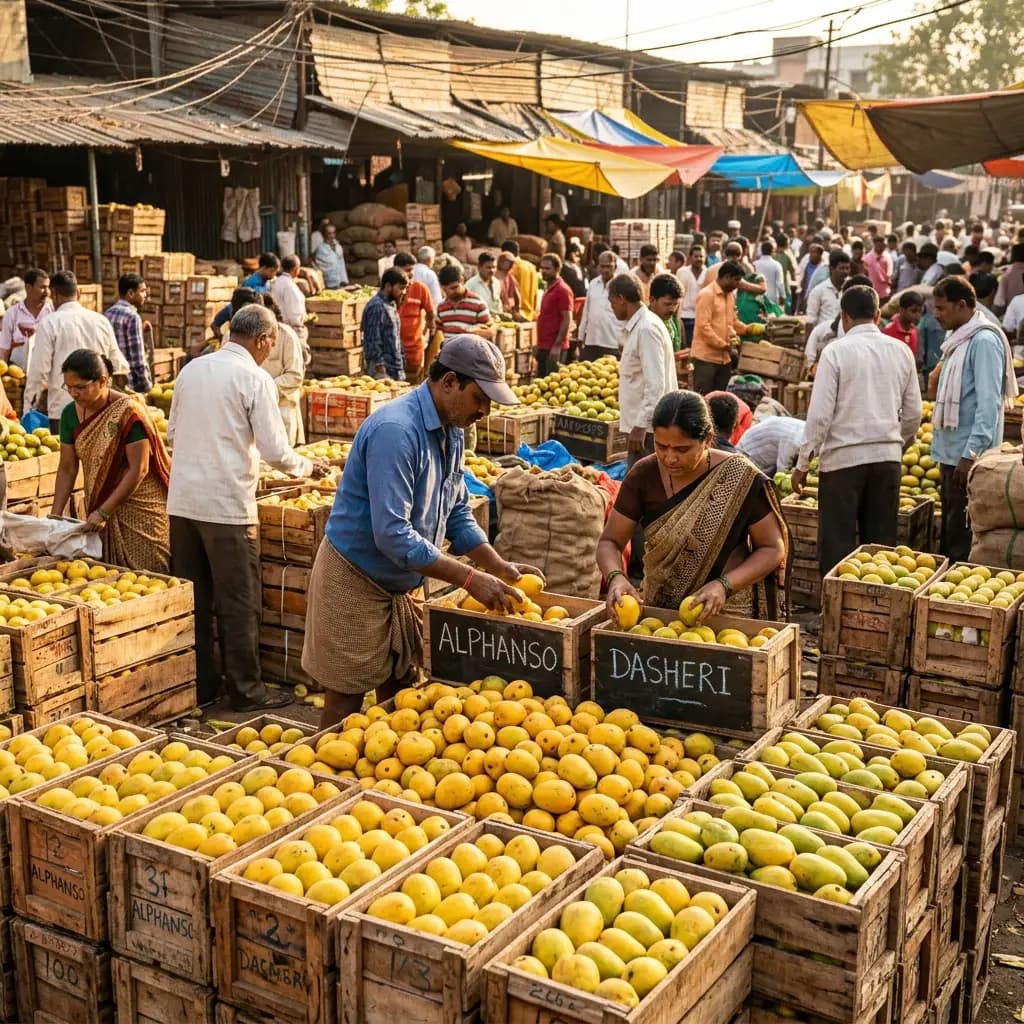
The Mango is not just a fruit in India - it is an emotion, a cultural institution, and a massive economic force. Declared India's national fruit, the aam holds a place in Indian life that no other fruit can claim - from ancient Sanskrit poetry to modern-day WhatsApp forwards announcing "hapus aa gaya!" India is the undisputed mango superpower, producing approximately 45-50% of the world's mangoes. Yet, because of the fruit's extreme seasonality (the main season lasts barely 3-4 months from April to July), perishability (ripe mangoes last just 5-8 days), and the stunning diversity of over 1,500 varieties - mango mandi bhav can swing wildly from week to week. A late-season hailstorm in Konkan can double Alphonso prices overnight, while a bumper crop in UP can crash Dasheri rates to Rs 500/qtl. For orchard farmers, traders, and the Rs 50,000+ crore mango economy, tracking live mandi rates is essential.
India's Mango Production: The King of Fruits by Numbers
🥭 National Output
India produces approximately 20-22 million tonnes of mangoes annually from about 2.5 million hectares of orchards, making it the world's largest producer by a huge margin. Despite this, India exports less than 1% of its production because domestic consumption is so massive. The mango economy - including fresh fruit, pulp, juice, pickles, and dried products - is estimated at over Rs 50,000 crore annually.
📍 Top Producing States
Uttar Pradesh leads with nearly 23-25% of national production (Lucknow, Malihabad, Saharanpur belt - famous for Dasheri and Langra). Andhra Pradesh and Telangana together contribute 20-22% (Banginapalli, Suvarnarekha). Maharashtra (Ratnagiri, Devgad - Alphonso heartland) accounts for about 10%. Karnataka (Dharwad, Belgaum - Badami variety), Gujarat (Junagadh - Kesar), Tamil Nadu, Bihar, and West Bengal follow. Each state has its own iconic variety and pricing dynamics.
Popular Mango Varieties & Their Market Value
- Alphonso (Hapus): India's most premium and internationally recognized mango. Grown exclusively in Maharashtra's Konkan coast (Ratnagiri, Devgad, Sindhudurg). GI-tagged. Peak season: April-May. Retail prices range from Rs 400-1,500/dozen depending on grade. A single Devgad Alphonso box (3 dozen) can fetch Rs 2,000-5,000 in Mumbai's Crawford Market. Commands premium export demand from UAE, UK, US, and Japan.
- Dasheri: The crown jewel of North India's mango belt. Origin traced to a single 200-year-old tree in Dasheri village near Lucknow. Intensely sweet, fiber-free, with a distinctive elongated shape. Malihabad near Lucknow is the epicentre. Peak season: June-July. Wholesale mandi rates hover between Rs 1,500-4,000/qtl during peak arrivals. The most volume-traded variety in Northern India.
- Langra (Banarasi): Originating from Varanasi, known for its greenish skin even when fully ripe (a trait that confuses buyers but delights connoisseurs). Rich, complex flavour considered by many North Indians as superior to Alphonso. Short but intense season: mid-June to mid-July. Trades at Rs 1,000-3,000/qtl wholesale. The saying in UP goes: "Dasheri starts the season, Langra finishes it."
- Kesar: Gujarat's pride from the Gir region (Junagadh, Amreli). GI-tagged. Named for its saffron-coloured pulp. Widely considered the best variety for aamras, milkshakes, and pulp-based products. Peak season: May-June. Mandi rates range from Rs 2,000-6,000/qtl. Also the primary variety used by Amul and other dairy brands for mango-flavoured products.
- Banginapalli (Benishan): The dominant table mango of South India, especially Andhra Pradesh and Telangana. Large, golden-yellow fruit with sweet, slightly tangy taste. One of the earliest arrivals in the season (March-April). Wholesale rates: Rs 1,500-4,500/qtl. Traded in massive volumes at Kurnool, Gadwal, and Vijayawada mandis.
- Totapuri (Ginimoothi): The workhorse of India's mango processing industry. Parrot-beak shaped, firm flesh, high pulp recovery (65-70%). Karnataka and AP are the main producers. Most mango pulp exported from India is Totapuri-based. Wholesale rates are the lowest among commercial varieties: Rs 800-2,500/qtl, but huge volumes compensate.
The Mango Season Calendar: When Prices Peak & Crash
🌸 Early Season (March-April)
The first arrivals of Banginapalli, early Alphonso, and Kesar command the highest premium of the year. Prices can be 3-5x higher than peak-season rates because supply is limited and pent-up consumer demand is enormous. Early Alphonso can retail at Rs 1,200-1,500/dozen in metro cities.
☀️ Peak Season (May-June)
All major varieties hit the market simultaneously - Alphonso, Dasheri, Kesar, Chausa. Supply peaks and prices drop 40-60% from early-season highs. This is when mandis see maximum volumes and bulk trading. Dasheri can drop to Rs 800-1,500/qtl. Alphonso to Rs 2,000-4,000/qtl wholesale. Processors (pulp/juice factories) buy heavily at these lower rates.
India's Mango Trade: Domestic & Export
🍽️ Fresh Consumption
About 75-80% of India's mango output is consumed fresh domestically. During peak season, mangoes become the default dessert in most Indian households. The Azadpur mandi in Delhi alone handles 3,000-5,000 tonnes of mangoes daily during June.
🏭 Processing Industry
About 15-18% goes into pulp, concentrates, juice, pickles, dried mango (amchur), and canned slices. India is the world's largest mango pulp exporter. Totapuri and Alphonso pulp are exported to over 70 countries. Major processors include Jain Irrigation, Capricorn Foods, and ABC Fruits.
🌍 Fresh Fruit Exports
India exports about 50,000-70,000 tonnes of fresh mangoes worth Rs 500-800 crore annually. Alphonso to UAE, UK, US; Kesar to Middle East; Banginapalli to Singapore, Malaysia. The biggest bottleneck is meeting phytosanitary standards - hot water treatment and vapour heat treatment are mandatory for many export markets.
🥭 Live Mango Mandi Rates Today
View Full DataTrack Mango Price Trends on Mandi Today
Using Mandi Today, you can compare mango rates across Alphonso, Dasheri, Totapuri and more. View 30-day price charts, identify which mandi offers the best rate today, and plan your purchasing or selling accordingly - all for free.
Frequently Asked Questions About Mango Prices
Q.What is the current wholesale rate of Mango today?
Based on live data from 20 active mandis, the average mango price today is Rs 10,433/qtl. Rates range from Rs 9,500 to Rs 12,000 depending on variety, grade, and location.
Q.Where is the highest Mango rate today in India?
The highest recorded rate today is Rs 12,000/qtl at Kallakurichi(uzhavar Sandhai ) in Tamil Nadu. Premium varieties like Alphonso and Kesar consistently command the highest rates, especially in metro wholesale markets.
Q.Which mango variety is most expensive in India?
Alphonso (Hapus) from Ratnagiri/Devgad is consistently the most expensive variety, with retail prices of Rs 400-1,500 per dozen and wholesale rates of Rs 4,000-12,000/qtl. The "first box" of the season from Devgad can auction for Rs 10,000+ per box. Among rare varieties, Miyazaki mangoes (originally Japanese, now grown experimentally in MP) have fetched Rs 2-3 lakh per kg in niche markets, though these are not commercially traded in mandis.
Q.When is the cheapest time to buy mangoes?
The cheapest window is typically the last 2-3 weeks of the main season for each variety. For Alphonso: late May to early June. For Dasheri/Langra: early to mid-July. For Chausa: late July. During these periods, supply peaks and prices can drop 50-70% from early-season rates. This is also the best time for bulk buyers, pickle makers, and processing units to source raw materials.
Q.How much mango does India export?
India exports approximately 50,000-70,000 tonnes of fresh mangoes and 1.5-2 lakh tonnes of mango pulp/concentrates annually, with a combined value of Rs 1,500-2,500 crore. Top export destinations for fresh Alphonso/Kesar include UAE, UK, USA, and Singapore. Mango pulp goes primarily to Middle East, Europe, and Southeast Asia. Despite being the world's largest producer, India's share in global fresh mango trade is only about 5% due to phytosanitary restrictions, limited cold chain infrastructure, and overwhelming domestic demand.