
Maida Atta Wholesale Price Today: Live Refined Flour Rates
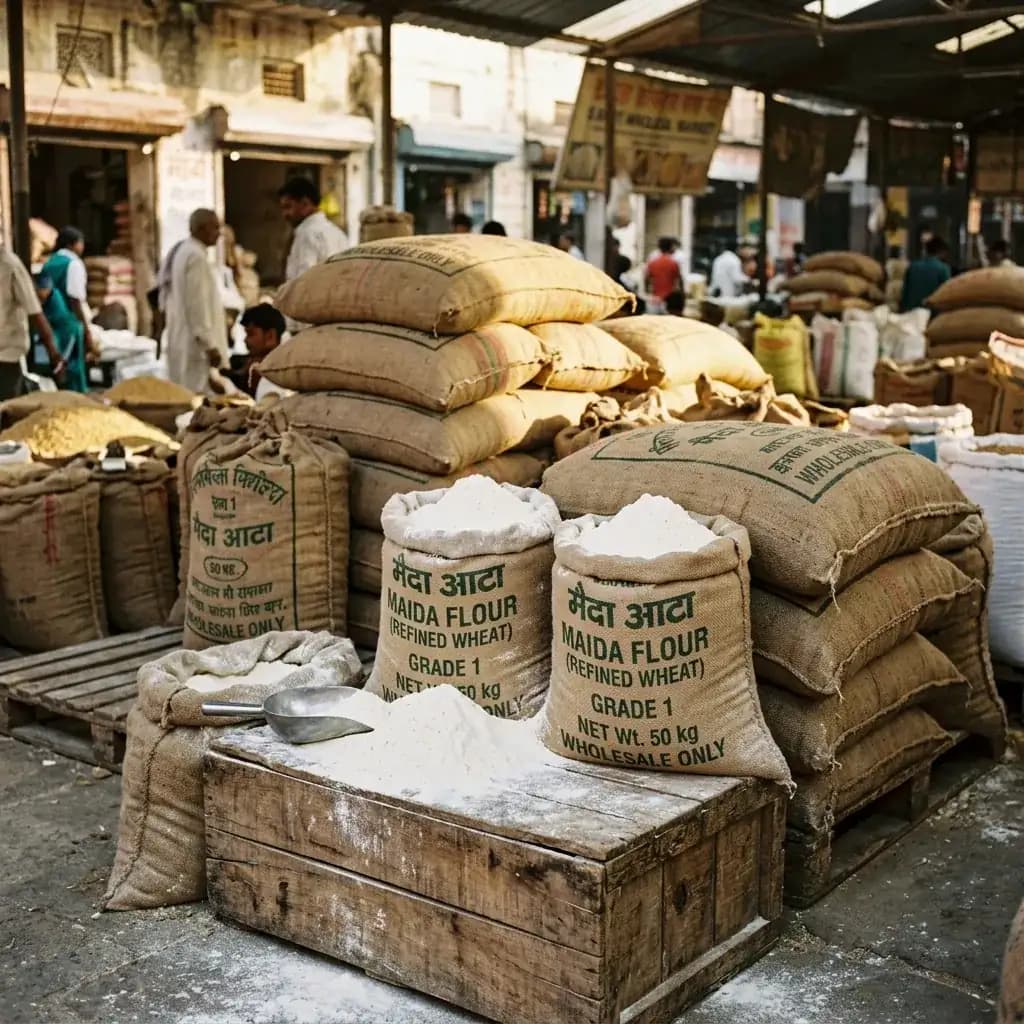
Maida, often known as refined wheat flour, is a fundamental ingredient in the Indian food industry. Extensively used in baking, fast food, and traditional sweets, it serves as the backbone for everything from everyday bread and biscuits to festive delicacies like jalebis, gulab jamuns, and samosas.
Unlike whole wheat flour (Atta) which retains the bran and germ, Maida is finely milled from the endosperm of the wheat grain. This gives it a soft, powdery texture and a white color, making it highly versatile for commercial food production. Tracking wholesale Maida prices is crucial for bakeries, restaurants, and food manufacturing companies across the country.
Maida Production: The Milling Process
🏭 Roller Flour Mills
Maida is commercially produced in large Roller Flour Mills (RFMs). During the milling process, the wheat kernel is stripped of its bran (outer layer) and germ (embryo), leaving only the starchy endosperm. It is then finely milled and sometimes bleached to achieve its bright white color and soft consistency.
📍 Major Milling Hubs
The price and availability of Maida are directly linked to major wheat-producing states. States like Punjab, Haryana, Uttar Pradesh, and Madhya Pradesh have a high concentration of flour mills. Cities with major bakery hubs or food processing zones also have localized wholesale markets for Maida.
Industrial & Domestic Uses
🥐 Bakery Industry
The bakery segment is the largest consumer of Maida. It is the core ingredient for breads, buns, cakes, pastries, biscuits, and cookies. The gluten in Maida provides the necessary elasticity and structure for baked goods.
🍜 Fast Food & Snacks
Maida is extensively used in Indian fast food. It is the main ingredient for samosa wrappers, kachoris, bhaturas, momos, noodles, and pasta. The surge in street food culture has significantly boosted Maida consumption.
🍬 Traditional Sweets
During Indian festivals, Maida demand skyrockets. It is an essential component for making traditional sweets like Jalebi, Gulab Jamun, Balushahi, and Gujiya. Festival seasons naturally lead to a temporary hike in wholesale prices.
What Drives Maida Prices?
Unlike raw agricultural commodities, Maida is a processed product. Its wholesale prices are influenced by:
- Wheat Procurement Prices: Since wheat is the sole raw material, any fluctuation in the MSP (Minimum Support Price) of wheat or open market wheat prices directly impacts Maida rates.
- Milling & Power Costs: The cost of operating Roller Flour Mills, including electricity, labor, and transportation logistics, plays a significant role in the final wholesale price of Maida.
- Festival Season Demand: Peak demand during Diwali, Holi, Eid, and the wedding season leads to short-term spikes in Maida prices as sweet shops and bakeries increase their procurement.
- Government Market Interventions: Government policies like the Open Market Sale Scheme (OMSS) for wheat can cool down flour prices by ensuring adequate supply to bulk consumers and millers.
🍚 Live Maida Wholesale Rates Today
View Full DataTrack Maida Price Trends on Mandi Today
View interactive Maida price charts with 30-day and 1-year trends. Compare wholesale rates across major mandis to make better procurement decisions for your bakery or food business.
Frequently Asked Questions About Maida Prices
Q.What is the wholesale rate of Maida today?
Based on live data from 20 mandis, the average Maida wholesale price today is Rs 7,390/qtl. Rates range from Rs 7,200 to Rs 7,400.
Q.Why do Maida prices change throughout the year?
Maida prices are heavily tied to the cost of wheat. When new wheat crops arrive in mandis (April-June), wheat prices drop, often leading to a stabilization or decrease in Maida prices. Conversely, during off-seasons or high-demand festival periods, prices tend to rise.
Q.Is there an MSP for Maida?
No, there is no Minimum Support Price (MSP) for Maida because it is a processed product, not an agricultural crop. The MSP applies only to raw crops like wheat. However, the MSP of wheat establishes a baseline cost for milling Maida.
Q.How is Maida different from standard Wheat Atta in terms of price?
Maida is typically slightly more expensive than standard whole wheat flour (Atta) because its milling process is more intensive, requires finer grinding, and involves the removal of bran and germ. The bleaching process (where applicable) also adds to the cost.