
Kanpur Mandi Bhav Today: Live Rates, Timing & Complete Guide
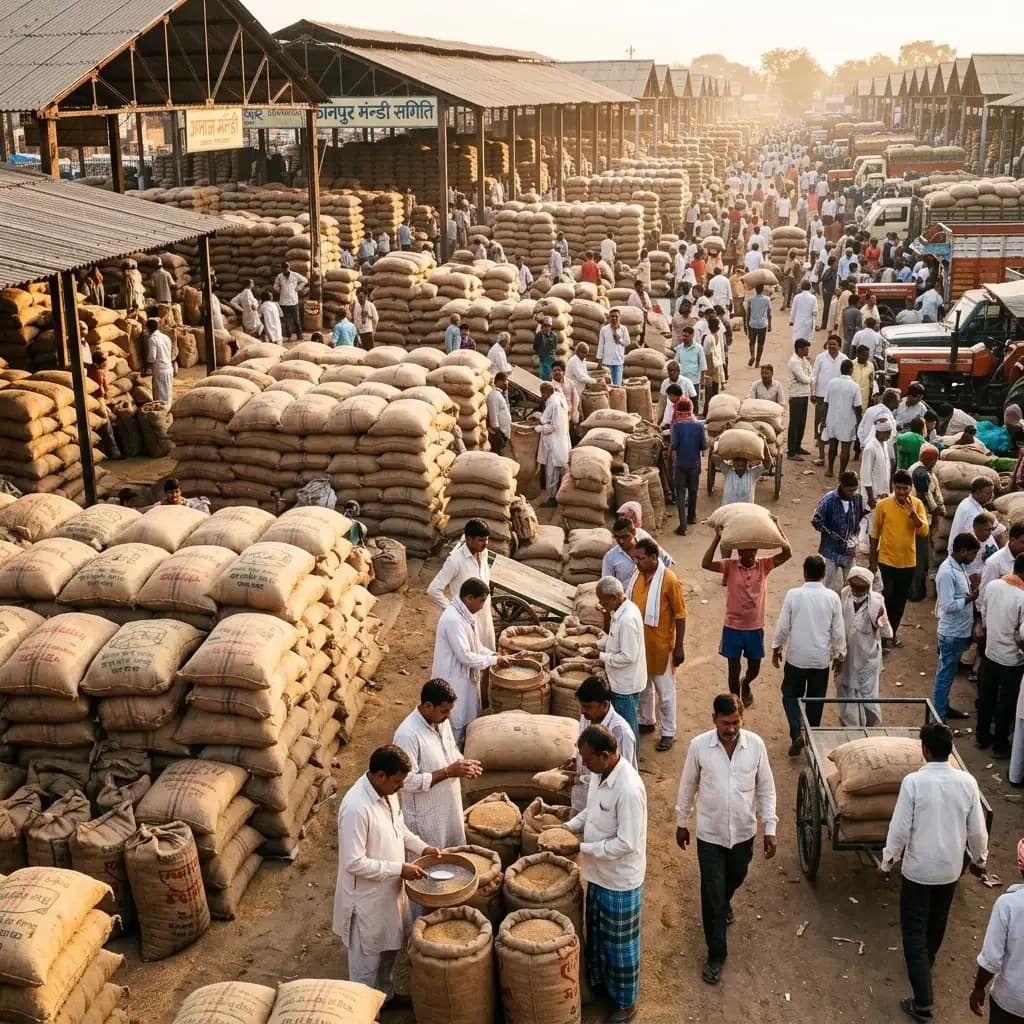
Kanpur — India's industrial powerhouse and the largest city in Uttar Pradesh by economic output — is not just about leather and textiles. The city is home to one of North India's most significant agricultural wholesale market networks. The Kanpur Grain Mandi (Anaj Mandi), situated in the historic Nayaganj area, has been a cornerstone of commodity trade in central UP for over a century. Kanpur's strategic location on the banks of the Ganga, at the crossroads of major rail and highway networks connecting Delhi, Lucknow, Allahabad, and Jhansi, makes it a natural aggregation point for agricultural produce from across the Bundelkhand region, the fertile Kanpur-Unnao belt, and the Ganga-Yamuna Doab. With the Kanpur Nagar and Kanpur Dehat districts combined, the mandi network handles wheat, gram (chana), gur (jaggery), edible oils, potato, onion, makhana, spices, and over 40 other commodities. The daily turnover across Kanpur's mandis ranges from Rs 15-30 crore on normal days, spiking to Rs 40-60 crore during peak Rabi season (March-May).
📋 Kanpur Mandi: Quick Facts at a Glance
Official Name
Krishi Upaj Mandi Samiti, Kanpur Nagar (under UP Krishi Utpadan Mandi Adhiniyam, 1964). Multiple mandis operate under this umbrella.
Key Market Yards
Kanpur Grain Mandi (Nayaganj/Anaj Mandi — grains & pulses), Nayaganj Sabzi Mandi (vegetables & fruits), Gur Mandi (jaggery — one of UP's largest), Oil & Oilseed Mandi, and wholesale markets in Govind Nagar, Fazalganj.
Location & Connectivity
Kanpur Nagar, UP. Major railway junction (Kanpur Central — 4th busiest in India). On NH-2 (Delhi-Kolkata) and NH-25 (Kanpur-Lucknow). Well connected to Agra (280 km), Delhi (440 km), Lucknow (80 km), Allahabad (200 km). Bundelkhand produce flows in from Hamirpur, Banda, Jalaun via SH roads.
Daily Turnover
Rs 15-30 crore on normal days across all market yards combined. Peaks to Rs 40-60 crore during Rabi season (March-May) when wheat, chana, and gur arrivals surge.
Auction Timing
Sabzi Mandi: 4:00 AM - 10:00 AM (earliest, perishables). Grain Mandi: 10:00 AM - 3:00 PM. Gur Mandi: 9:00 AM - 1:00 PM (seasonal, Oct-March peak). Saturday is a regular working day.
Weekly Off / Holidays
Closed on Sundays and gazetted national holidays (Republic Day, Independence Day, Gandhi Jayanti, Holi, Diwali, Eid, Muharram). The vegetable mandi may operate partially on some holidays due to perishable nature of goods.
Key Commodities Traded at Kanpur Mandi
- Wheat (Gehun) — The Rabi Anchor: Kanpur is a major wheat aggregation point for central UP. During the March-May Rabi harvest, wheat floods the Anaj Mandi daily. Government MSP procurement through FCI runs actively at dedicated centres. Both Lok-1 and PBW-343 varieties dominate. UP being India's top wheat state produces over 30 million tonnes, and Kanpur handles a significant slice of central and southern UP's wheat flow. Private traders supply flour mills (atta chakki) across the Kanpur-Unnao-Fatehpur industrial belt.
- Gram (Chana) & Pulses: Central UP and the adjoining Bundelkhand region are significant chana producers. Kanpur's Anaj Mandi handles massive chana volumes during March-April. Both desi chana (for dal processing) and kabuli chana are traded. Masoor (lentil), moong, and urad also see significant arrivals. Kanpur's dal mills (located in Fazalganj and Govind Nagar industrial area) source raw pulses directly from the mandi, creating a strong local demand base.
- Gur (Jaggery) — Kanpur's Specialty: Kanpur's Gur Mandi is one of the largest jaggery trading centres in Uttar Pradesh. The surrounding Kanpur Dehat, Unnao, Fatehpur, and Hardoi districts are major sugarcane-growing areas. During the crushing season (October-March), raw gur from local kolhus (crushers) arrives in massive quantities. Kanpur gur rates are a benchmark for the entire UP-MP-Bihar gur trade. Varieties include patali gur (block), danedar gur (granulated), and liquid gur. The Gur Mandi also trades shakkar (raw sugar).
- Edible Oil & Oilseeds: Kanpur has a historic edible oil industry — Kanpur's oil mills were among the earliest in UP. Mustard oil (sarson ka tel) is the dominant edible oil in the region. The Oil Mandi trades in mustard seeds, groundnut (peanut), soyabean oil, and refined oils. Kanpur mustard oil rates are widely followed by retailers across UP, MP, and Bihar. The city has dozens of oil extraction and refining units.
- Potato & Vegetables: The Nayaganj Sabzi Mandi handles the city's enormous vegetable demand — Kanpur is a metro with 30+ lakh population. Potato, onion, tomato, cauliflower, green chilli, and seasonal vegetables are traded daily. Potato arrivals come from the nearby Farrukhabad-Kannauj belt (a major UP potato zone) and from cold stores in Aligarh and Agra. Being an industrial city, Kanpur's vegetable consumption is consistently high year-round.
- Makhana (Foxnut) & Dry Fruits: Kanpur Grain Mandi is a significant makhana trading hub. While makhana is predominantly produced in Bihar (Madhubani, Darbhanga), Kanpur serves as a major redistribution centre for UP and central India. High-value makhana can trade at Rs 30,000-50,000/qtl. Dry fruits (kishmish, badam, kaju) also have a niche wholesale market during the festive season (Oct-Jan).
- Other Commodities: Barley (jau), maize, paddy/rice, turmeric (haldi), dhaniya (coriander), methi (fenugreek), and miscellaneous spices are also traded regularly. Barley arrivals are notable during March-April as the Kanpur-Fatehpur belt grows jau for animal feed and malting.
Kanpur's Strategic Significance: Central UP's Trading Capital
🏭 Industrial Demand Engine
Unlike rural mandis that purely aggregate, Kanpur has massive local processing demand. The city's dal mills, oil extraction units, atta chakkis, and gur processing units create a captive market within the mandi itself. This dual role — as both a trading hub and consumption centre — keeps prices stable and volumes consistently high.
🚂 Railway Junction Advantage
Kanpur Central is one of India's busiest railway junctions, connecting all four directions. This makes Kanpur a natural transshipment point — produce arriving by truck from Bundelkhand and rural UP can be redistributed via rail to Mumbai, Kolkata, Chennai, and the Northeast. The rail connectivity particularly matters for high-value, low-volume commodities like makhana and spices.
🌾 Bundelkhand Feeder
The economically challenging Bundelkhand region (Hamirpur, Banda, Jalaun, Mahoba, Jhansi) depends heavily on Kanpur as its primary market outlet. Farmers from these districts transport chana, masoor, wheat, and oilseeds to Kanpur mandis because local mandis in Bundelkhand often lack competitive buyer density. This makes Kanpur a lifeline market for the region.
📅 Kanpur Mandi Seasonal Calendar
March - May
🌾 Peak Rabi: Wheat, Chana, Masoor, Barley arrivals + FCI procurement
Oct - March
🍯 Gur (jaggery) crushing season — highest turnover at Gur Mandi
Oct - Dec
🌾 Paddy/Rice Kharif arrivals + festive dry fruit demand surge
Year-round
🥔 Vegetables, edible oil, makhana — steady urban demand
🏪 Live Kanpur Mandi Rates Today
View Full DataTrack Kanpur Mandi Trends on Mandi Today
Compare Kanpur wheat, chana, and gur rates with Lucknow, Allahabad, and Delhi mandis. View 30-day price charts, track daily arrivals, and time your buying and selling perfectly — all free on Mandi Today.
Frequently Asked Questions About Kanpur Mandi
Q.What are the commodity rates at Kanpur Mandi today?
Today, 20 commodities are being actively traded at Kanpur mandis. The highest rate is Rs 7,498/qtl for Groundnut, while the lowest is Rs 550/qtl for Potato. Scroll up to see the full live rate card covering Kanpur Grain Mandi and sub-markets.
Q.What is the timing of Kanpur Mandi?
Kanpur has multiple market yards with different timings. The Nayaganj Sabzi Mandi opens earliest at 4:00 AM for vegetable and fruit trading, closing by 10:00 AM. The Grain (Anaj) Mandi operates from 10:00 AM to 3:00 PM for wheat, chana, and pulses. The Gur Mandi runs from 9:00 AM to 1:00 PM during the crushing season (October-March). All mandis are closed on Sundays and gazetted national holidays. Saturday is a regular working day.
Q.What is the gur (jaggery) rate in Kanpur today?
Kanpur's Gur Mandi is one of the most important jaggery trading centres in North India. Gur prices vary by type — patali gur (solid blocks) typically trades at Rs 2,800-4,500/qtl, danedar gur (granulated) at Rs 3,500-5,500/qtl, and organic/premium gur can fetch Rs 5,000-8,000/qtl. Rates are lowest during peak production (December-February) and rise during off-season (June-September). Check the live rates section above for today's exact prices from Kanpur markets.
Q.Which districts send produce to Kanpur Mandi?
Kanpur Mandi draws produce from a vast catchment spanning central UP and Bundelkhand. Major feeder districts include: Kanpur Dehat (adjacent rural district — wheat, chana, gur), Unnao (sugarcane, wheat), Fatehpur (wheat, barley, chana), Hamirpur, Banda, Jalaun, and Mahoba from Bundelkhand (pulses, oilseeds, chana), Farrukhabad and Kannauj (potato), and Hardoi (sugarcane, paddy). The 80 km Lucknow-Kanpur corridor also sees two-way commodity flow. Traders from as far as Jhansi, Lalitpur, and even Sagar (MP) sometimes bring produce to Kanpur for better prices.
Q.What is the annual turnover of Kanpur Mandi?
Kanpur's combined mandi network (Grain Mandi, Sabzi Mandi, Gur Mandi, Oil Mandi) processes an estimated annual turnover of Rs 3,000-5,000 crore, depending on commodity prices and crop volumes. The Grain Mandi alone handles an estimated 10-15 lakh tonnes of grains and pulses annually. The Gur Mandi processes 3-5 lakh tonnes during the crushing season. Being a Tier-1 city with a large industrial and consumer base, Kanpur's mandis have higher and more stable throughput than most UP mandis.