
Jeera (Cumin Seed) Mandi Bhav Today: Live Prices Across India
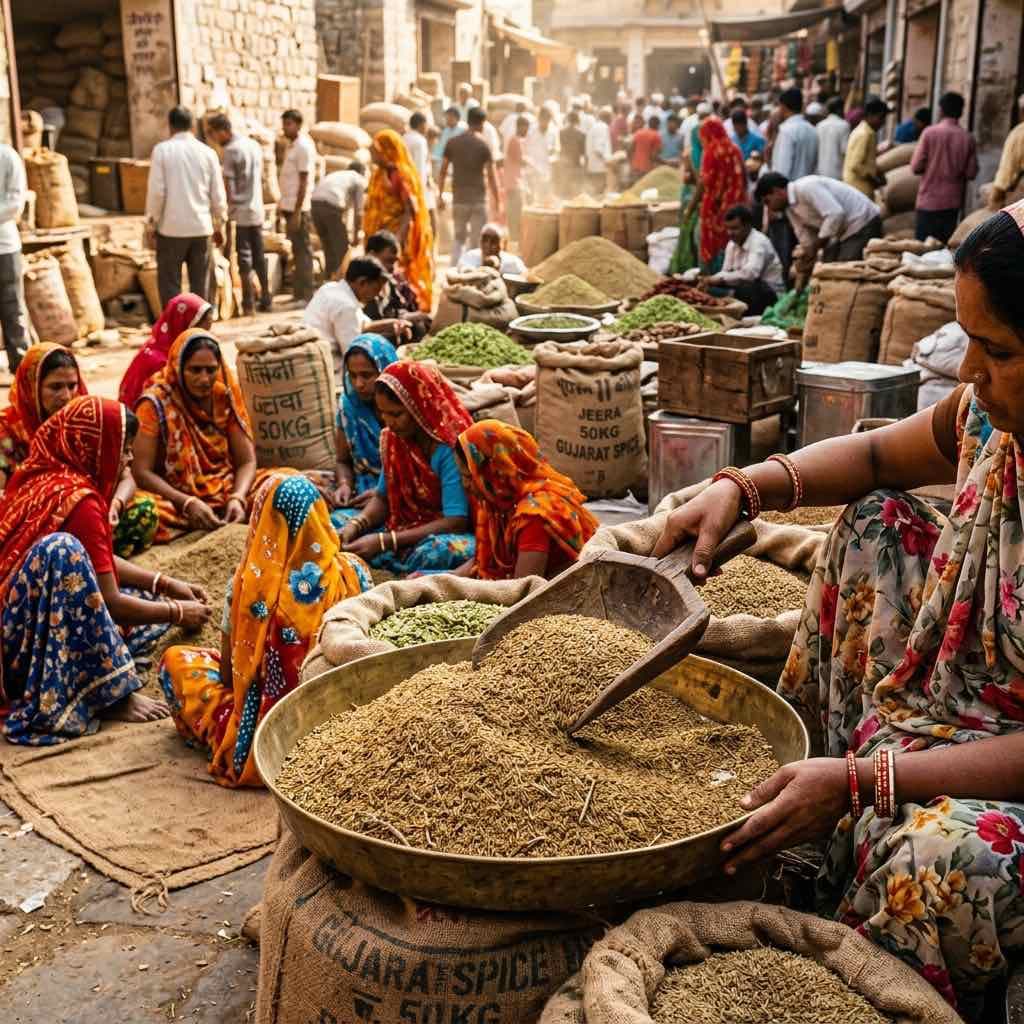
Jeera, or Cumin Seed, is arguably India's most valuable spice crop per quintal. Trading regularly between Rs 20,000-60,000/qtl - sometimes even higher during global supply squeezes - jeera occupies a unique space where agriculture meets high-value commodity trading. India produces roughly 70% of the world's cumin and consumes about 60% of global output, making the country both the largest producer and the largest consumer. The Unjha mandi in Gujarat is the undisputed global price-setter for cumin, where daily arrivals and rates determine trading sentiment from Turkey to Syria to China. For farmers in western Rajasthan and northern Gujarat, a good jeera crop can transform their financial fortunes overnight.
India's Jeera Production: The Spice Giant
🧂 National Output
India produces approximately 8-10 lakh tonnes (0.8-1.0 million tonnes) of cumin annually across about 10-12 lakh hectares. Production can swing by 20-30% year-to-year based on rainfall and frost incidence during the Rabi season (November sowing, March-April harvest). This production volatility is the primary reason why jeera prices are among the most volatile spice commodities.
📍 Production Geography
Gujarat and Rajasthan together account for over 95% of India's cumin production. In Gujarat, Banaskantha, Mehsana, Patan, and Kutch are the core districts. In Rajasthan, Barmer, Jalore, Jodhpur, and Nagaur lead production. The Unjha APMC in Mehsana district is the world's largest cumin trading hub, where 15,000-30,000 bags arrive daily during peak season (March-May).
Jeera Grades & Quality Parameters
- Singapore Parity (Export Grade): The highest quality grade with clean, uniform seeds, low moisture (<10%), minimal foreign matter. This grade fetches the top price and is primarily destined for export. Named after Singapore as a traditional re-export hub for Indian spices.
- Unjha Quality / FAQ: Fair Average Quality - the standard benchmark for domestic trading. Good colour, reasonable purity, moisture under 12%. Most NCDEX deliveries and bulk domestic trades happen at this grade.
- Bold / Medium / Lean: Sub-grades based on seed size and plumpness. Bold jeera (larger seeds) trades at Rs 1,000-3,000/qtl premium over lean (thinner seeds). Rajasthan jeera tends to be bolder than Gujarat jeera due to soil and climate differences.
- RCT / Damaged: Rain-cut or moisture-damaged lots traded at steep discounts (20-40% below FAQ). Common when unseasonal rains hit during harvest. Often bought by oil extraction units or low-end spice blending companies.
Jeera: A Global Commodity
🌍 Export Markets
India exports approximately 1.5-2.5 lakh tonnes of cumin annually, worth Rs 5,000-8,000 crore. Major buyers include China, Bangladesh, UAE, USA, Turkey, Vietnam, and Brazil. When Indian production falls short, importing countries switch to alternatives from Syria and Turkey, creating competitive pricing dynamics.
📊 Price Drivers
Jeera prices are driven by: (1) Production estimates from Gujarat/Rajasthan - even 10% shortfall can push prices up 30-50%; (2) Export demand from China - China's buying cycles create massive price spikes; (3) Carry-forward stock levels from previous year; (4) Unjha mandi daily arrivals - lower arrivals signal tight supply and higher prices; (5) Turkey/Syria competing crop size.
Where Jeera Is Used
🍛 Kitchen Spice
60-65% of domestic consumption is as whole/ground cumin in households and restaurants. Jeera is an essential tempering spice (tadka) in dal, rice, vegetables, and curries across all Indian cuisines.
🏭 Spice Blending
20-25% goes into branded spice mixes (MDH, Everest, Catch, Tata Sampann). Cumin is a critical ingredient in garam masala, sabzi masala, chole masala, and biryani masala blends. Demand from this sector is steadily growing at 10-12% annually.
💊 Oil & Medicinal
Cumin seed oil (3-4% yield) is used in pharma, perfumery, and Ayurvedic medicine. Cumin water (jeera paani) has become a mainstream health drink. This niche but high-value segment adds Rs 2,000-3,000 crore annually to the cumin economy.
🧂 Live Jeera (Cumin) Rates Today
View Full DataTrack Jeera Price Trends on Mandi Today
View interactive jeera price charts with 30-day and 1-year trends. Compare rates across Unjha, Jodhpur, Rajkot and other key mandis. Stay ahead of price swings in this volatile spice commodity.
Frequently Asked Questions About Jeera Prices
Q.What is the current rate of Jeera (Cumin) today?
Based on live data from 20 mandis, the average Jeera price today is Rs 25,504/qtl. Rates range from Rs 23,500 to Rs 34,545 depending on quality grade and location.
Q.Where is the highest Jeera rate today?
The highest rate today is Rs 34,545/qtl at Dhorimanna in Rajasthan. Export-grade (Singapore Parity) jeera consistently commands the highest rates.
Q.Why is the Unjha mandi rate so important for jeera?
Unjha APMC in Gujarat's Mehsana district is the world's single largest cumin trading centre. It handles 15,000-30,000 bags per day during peak season and serves as the delivery centre for NCDEX cumin futures. The Unjha rate is the reference price for all domestic and export contracts. When Unjha arrivals drop, it signals tight supply and prices across all mandis rise in response.
Q.How much jeera does India export?
India exports 1.5-2.5 lakh tonnes of cumin seeds annually, worth Rs 5,000-8,000 crore depending on global prices. China is the single largest buyer (30-40% of Indian exports), followed by Bangladesh, UAE, USA, and Turkey. Export contracts are typically benchmarked to Unjha FAQ quality. India competes primarily with Turkey and Syria in the global cumin market.
Q.What was the all-time high price of jeera?
Jeera touched its all-time high of approximately Rs 55,000-60,000 per quintal in mid-2023 to early 2024, driven by two consecutive years of below-normal production and strong export demand from China. Prices have since corrected as the 2024 crop turned out better. Historically, jeera has shown cycles of 2-3 years where prices can double or halve, making it one of the highest-risk, highest-reward spice crops for farmers.